
 Image 1 of 3
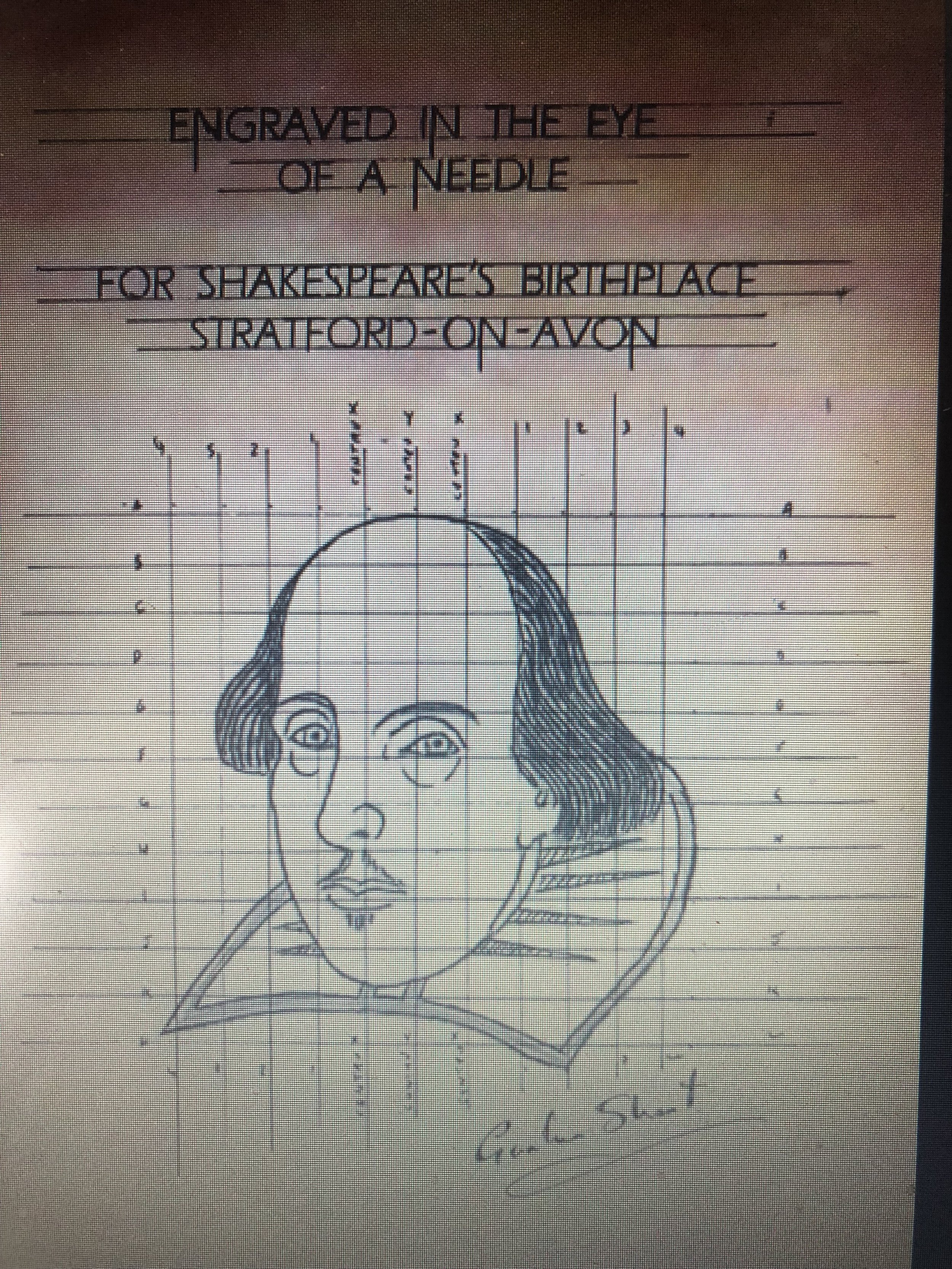 Image 2 of 3
 Image 3 of 3
Medium: Micro-Engraving on a £50 Note
Presentation: Bespoke Wooden Display Case with Integrated Magnifying Glass and Lighting System (Prototype Shown)
This intricate micro‑engraving pays tribute to William Shakespeare, the world’s most celebrated playwright and a defining figure of British cultural heritage. Engraved entirely by hand onto the surface of a genuine £50 note, the artwork remains almost invisible to the naked eye until viewed under magnification. Only then does the finely rendered portrait emerge, revealing Shakespeare’s unmistakable profile with extraordinary delicacy and precision.
Working on banknote fibres is one of the most technically demanding challenges in miniature art. The surface is textured, delicate, and highly absorbent, requiring exceptional control to avoid tearing or distortion. Under extreme magnification, Graham Short uses ultra‑fine needles and custom‑engineered tools to carve each microscopic line with near‑motionless accuracy. The curve of the collar, the shaping of the facial features, and the subtle detailing of the portrait must all be formed one microscopic cut at a time. Even the smallest elements, the tilt of the head, the suggestion of light, the refinement of the silhouette, are engraved at a scale measured in microns.
To present the artwork as intended, the engraved £50 note is housed in a bespoke wooden display case designed specifically for micro‑engravings. The prototype includes a precision‑fitted magnifying glass and an adjustable lighting system, allowing viewers to explore the engraving in perfect clarity. The warm wood, integrated optics, and soft illumination create a museum‑grade presentation that honours both the subject and the craftsmanship.
Medium: Micro-Engraving on a £50 Note
Presentation: Bespoke Wooden Display Case with Integrated Magnifying Glass and Lighting System (Prototype Shown)
This intricate micro‑engraving pays tribute to William Shakespeare, the world’s most celebrated playwright and a defining figure of British cultural heritage. Engraved entirely by hand onto the surface of a genuine £50 note, the artwork remains almost invisible to the naked eye until viewed under magnification. Only then does the finely rendered portrait emerge, revealing Shakespeare’s unmistakable profile with extraordinary delicacy and precision.
Working on banknote fibres is one of the most technically demanding challenges in miniature art. The surface is textured, delicate, and highly absorbent, requiring exceptional control to avoid tearing or distortion. Under extreme magnification, Graham Short uses ultra‑fine needles and custom‑engineered tools to carve each microscopic line with near‑motionless accuracy. The curve of the collar, the shaping of the facial features, and the subtle detailing of the portrait must all be formed one microscopic cut at a time. Even the smallest elements, the tilt of the head, the suggestion of light, the refinement of the silhouette, are engraved at a scale measured in microns.
To present the artwork as intended, the engraved £50 note is housed in a bespoke wooden display case designed specifically for micro‑engravings. The prototype includes a precision‑fitted magnifying glass and an adjustable lighting system, allowing viewers to explore the engraving in perfect clarity. The warm wood, integrated optics, and soft illumination create a museum‑grade presentation that honours both the subject and the craftsmanship.